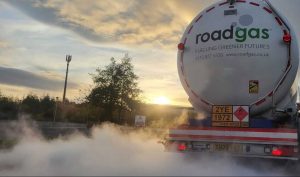
What is Biogas and How It’s Used in Transport
Biogas is a renewable gas produced when organic materials—such as food waste, slurry, and crop residues—break down without oxygen (through anaerobic digestion).
Upgrade that raw biogas by removing CO₂ and impurities, and you get biomethane: a high-purity methane that’s chemically similar to fossil natural gas but made from waste.
It can power heavy goods vehicles (HGVs) as compressed natural gas (CNG) or liquefied natural gas (LNG), offering fleets a practical, lower-carbon drop-in alternative to diesel. In the UK, the Renewable Transport Fuel Obligation (RTFO) incentivises the supply of renewable fuels, such as biomethane, for road transport, thereby accelerating their adoption across logistics and haulage.
In short, if you’re searching for biogas as vehicle fuel, biogas fuel suppliers, or biogas fuel for fleets, you’re looking at biomethane—an immediately deployable route to cutting emissions without replacing your vehicles or your operations.
How Natural Gas is Produced and Stored
From waste to wheels: biogas is produced through anaerobic digestion and then upgraded to biomethane, which meets strict European standards for grid injection and vehicle fuel quality (CEN standards under EN 16723).
Storage & formats:
- CNG (biomethane as compressed natural gas) is typically stored at about 200–300 bar (most commonly 200 bar at 15°C in European NGV standards) and dispensed at forecourts for day-to-day HGV operations. This is the backbone of most natural gas filling / natural gas fueling (refuelling) stations serving trucks.
- LNG (liquefied natural gas/biomethane) is methane cooled to ~–160 °C, reducing its volume by ~600 times. That energy density extends range for long-haul operations, stored in vacuum-insulated onboard tanks.
Advantages of Using Biogas as a Vehicle Fuel
Deep, verifiable GHG cuts. Independent UK trials show ~76% well-to-wheel GHG savings for trucks running on 100% biomethane versus diesel, with driver-reported improvements in noise and comfort. When biomethane is produced from waste (e.g., manure), the overall lifecycle impact can even be carbon-negative because methane that would otherwise escape is captured and utilised.
Air quality you can stand behind. With Euro VI aftertreatment, regulated pollutants (NOx/PM) are low for both diesel and gas. Evidence from UK testing shows similar NOx levels between modern gas and diesel HGVs, while the broader literature still debates the marginal advantage of either. Therefore, the smart reason to switch is the significant, proven reduction in GHG emissions today.
Policy-aligned and future-proof. The UK’s RTFO recognises and rewards sustainable renewable fuels in transport, supporting the business case for fleets to transition now while zero-emission technologies scale for all duty cycles.
Environmental Benefits of Biogas over Diesel or Petrol
- Up to ~76%+ WTW CO₂e savings on dedicated biomethane (higher, even carbon-negative, when derived from certain wastes).
- Lower fuel lifecycle risk by converting unavoidable wastes into energy rather than flaring or venting methane.
- Meaningfully quieter operations, aiding night-time logistics and urban deliveries.
Roadgas: Your Partner in Natural Gas
Choosing the right biogas fuel suppliers isn’t just about the molecule—it’s about uptime, safety, training and data. Roadgas designs, builds and operates natural gas refuelling infrastructure for HGV fleets, with a practical focus on driver experience, safety and measurable carbon reduction.
Roadgas’ Onsite and Public Refuelling Solutions
- On-site stations tailored to your duty cycle (fast-fill CNG or LNG), with options for private access, fuel-card/fob authorisation, telemetry and company-level reporting of fuel use and CO₂e savings.
- Public access stations to extend range and flexibility for national operations, supported by live status updates and clear HSSE guidance for drivers.
- Driver-first training & safety: step-by-step refuelling guides, PPE guidance (especially for LNG), and instant fault reporting to keep trucks moving.
- Data that matters: Show your team and stakeholders exactly how much CO₂e you’re reducing per fill, per route, and per quarter.
What is Biogas and How It’s Used in Transport
(Quick recap for searchers who land here via “what is biogas“) It’s methane from waste, upgraded to biomethane for use as a natural gas fuel or as a fuel for filling. In trucks, it’s dispensed as CNG or LNG, providing fleets with a rapid route to decarbonisation without compromising payload or range.
Why Roadgas helps you beat diesel—and the competition
- Speed to decarbonise: deploy infrastructure in months, start booking GHG savings this year.
- Driver adoption: intuitive designs and training reduce first-time anxiety and standardise safe refuelling.
- Operational fit: we build around your routes, depot footprint and telematics—not the other way round.
- Marketing & ESG support: real-world CO₂e dashboards to showcase progress to boards, customers and tender evaluators.
Ready to trial biomethane across your fleet?
Let’s map your routes, specify the right mix of onsite and public access, and forecast your year-one CO₂e and cost outcomes.